How Bob Calvano Is Building a Strategic In-house Team (Part One)

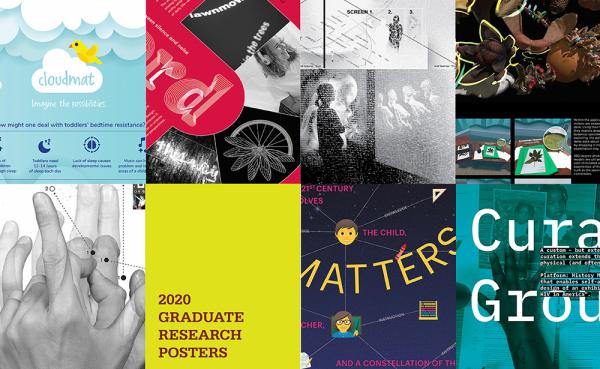
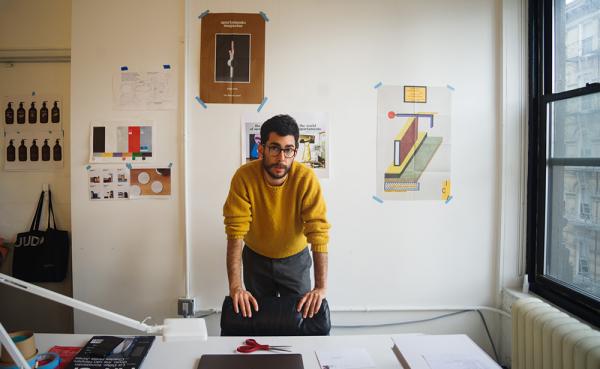
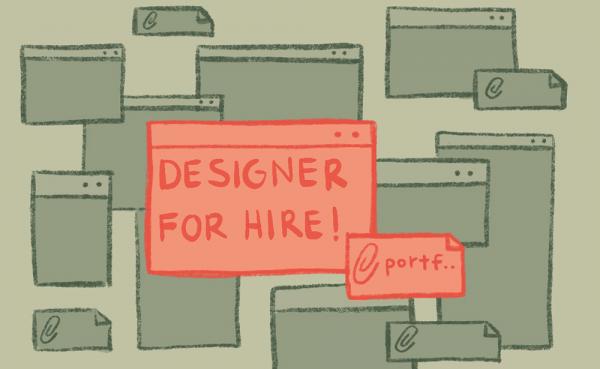
Bob Calvano heads up a 50+ multidisciplinary in-house creative team that supplies a wide range of services to clients in every sector of the pharmaceutical company Merck. Their core offerings include photography, environmental design, print, illustration and video production. The images in this slideshow are examples of the team’s work. (Image courtesy of Bob Calvano)

An example of the work produced by Bob Calvano’s in-house design team at Merck (Image courtesy of Bob Calvano)

An example of the work by Bob Calvano’s in-house design team at Merck (Image courtesy of Bob Calvano)

An example of the work produced by Bob Calvano’s in-house design team at Merck (Image courtesy of Bob Calvano)

An example of the work produced by Bob Calvano’s in-house design team at Merck (Image courtesy of Bob Calvano)

An example of the work produced by Bob Calvano’s in-house design team at Merck (Image courtesy of Bob Calvano)
Bob Calvano heads up the Media Services group, a 50+
multidisciplinary in-house creative team at Merck, one of the leading
pharmaceutical companies operating in the global marketplace today.
As part of the company’s shared-services department—an
internal group providing HR, travel, IT, meetings and marketing support to all
of Merck’s business units—Bob’s team supplies design, video, photography,
webcasting, multimedia and programming services to clients in every sector of
the company. The department bills back its internal clients to support its
operating budget.
Bob recently championed the implementation of a managed-services model that is comprised of a group of 45 on-site creatives operating under the guidance of a Merck managerial team. (Full disclosure: Andy Epstein, the interviewer, recently joined the Merck managed-services group as its resource manager.) This collaboration is the first step in a series of
initiatives to position the Media Services team as a strategic collaborative
partner within company. In this edited three-part conversation, Bob outlines the other
strategies and tactics he and his group are employing to raise their stature
and increase their impact —and offers valuable insights to help you do the
same.
Part one focuses on account management and marketing.
What’s your ultimate
goal right now, in terms of establishing your team as a strategic partner
within Merck? What does that look like for you?
It looks like having the right parts in place, the right
pieces of the team in place. Early on I identified the strengths, weaknesses,
did the SWOT analysis,
if you will, of the team to see where we had gaps, where we could grow the
business. What do we want to do? What do we not want to do? In doing that what
I realized is…to ultimately become a strategic team versus more of the
order-taking type team, we need to have foundational elements in place that
will allow us to grow, to engage in a level of conversation that we want to
have with our clients.
One of the gaps I identified was account management. [Not sure of the difference between account managers and project managers? Check out this post.] Putting
an account team in place would allow us to understand our clients really,
really well—what their needs are, what their goals are, what their pain points
are, what their plans for the year are, their budget, what they are spending
money on, when they are going to outside agencies and how we can bring work
in-house that my team is capable of supporting. It would also allow us to get a
really good relationship going, understand the business and show the divisions
within the company how we can partner with them to help them meet their
business needs and to do it cheaper and on brand and on target, more
efficiently.
OK, so a lot of teams
may want to establish an account management group, but they’re faced with
having to fund that to make that happen. How did you do that for your group?
I’m
in the process of doing that. Being a chargeback organization, I have to look
at what all the costs and expenses are across the board and figure out how to
cover them. I knew the change was going to create some additional overhead, so
my initial ask of my manager was, hey, can we have these positions funded while
we get the account management team established? But that was not an option. So
I put a whole different structure together, baking the cost of account management into our rates, and got approval from my boss, from
her boss... got buy in a few levels up. Once the execs were on board, I made
sure to get buy in a few levels down. I was very transparent, and the strategy
was to gain advocates for the change. Now salaries will be covered in our prices for print design, production design, web
design, development, proofreading, photography, video production, etc.
And they bought into
this plan because of the fact that you’d be able to service the company better
with an account management team in place?
Absolutely. And I think it was an easy sell because being in
a shared-services organization, they understand the value of customer service
and client interaction and the benefit to the company that account management
will add. And by putting these folks in place we can support one of our
ultimate goals, growing the business. The way to grow...is to get
these folks implanted in all the different lines of business that Merck is
servicing in order to get more and more work coming into the organization,
which means more and more billable hours, which means it’s going to be easier
to cover the account management overhead. This is good for the company because
we can provide services more cost effectively than outside vendors and leverage
our institutional knowledge to get the job done more efficiently, with fewer
errors and on brand right out of the gate.
And I just want to
reiterate, for people who are reading this, that your team operates under a
chargeback model, and it is under shared services where you’ve got managers who
are probably more inclined to understand your strategy and the benefit that you
bring to the company.
Yes, but there’s an awful lot of education that still needs
to happen around that. I’m surprised at how much I need to educate folks, even
within the shared business services organization; a lot of people don’t
understand what we do.
So how do you educate
them?
There are a lot of dog and pony shows that go on. However, I
try to do it selectively, so understanding where there’s a great potential for
business growth is critical. We need to get that person and their team into the
studio, into the television studio, into the design studio, and… let them know
what our capabilities are and really get them confident that we can support
their business needs. Part of it is making them feel and believe that we have
the capability in-house, we have the talent in-house and we have the technology
in place.
There are these misconceptions, or perceptions I should say,
that we don’t have the latest technology in place, or you guys won’t be able to
give us the quality that we need for video production because you haven’t
upgraded your cameras or whatever. The dog and pony show is literally showing
potential clients the state-of-the-art technology and the team that we have in
place and educating them on the fact that you can’t find better equipment or
talent anywhere on the outside. We have it here.
What about the
quality of your talent, of the human resources that you have within the group?
That might be a little bit more of a difficult sell. Is there a prejudice
against your team that exists, or that did exist that you had to address?
I think that exists... I think the blanket statement may be
that in-house teams don’t always get the credit from a talent perspective that
the outside agency or design studio may get. We’re trying to dispel those
beliefs by explicitly showing the quality of work we do in the capability
presentations, showing what finished, high-level, tier-one creative looks like.
Many times we are competing against agencies for business, so our work needs to
be at that level. So we’re showing them what the work looks like, what the
costs are associated with that type of work, and then we compare those costs to
external prices and quotes from vendors.
We’re trying to get them to see what our talent is capable
of in every way possible. For example, we display the industry awards that we
get. When you walk into any one of our studios there’s a whole bunch of awards
displayed for work we’ve done in photography, video production, design, etc.
Do you have other
marketing initiatives going on that help sell the group to the rest of the
company?
We are changing the name of the group. Being part of a
shared business services organization, in many ways, aligns us to the typical
transactional type things that occur within a shared services organization. So
we’re changing the name to try to pull away from the transactional and have a
name that supports the more strategic. The name that’s on the table is Global
Creative Studios versus Creative Services. Not that I’m wanting to pull the
services out of there, but I’m more into positioning the name to be a bit more
strategic and show that we have different types of studios... photography
studios, design studios, television studios… and how it’s within those studios
that our clients are going to find the solutions to their business needs. [Update:
Since the interview, the team’s name has changed to “Media Services.”]
We’re also initiating a major awareness campaign, so we have
redesigned our website, changed up all the content that’s out there and are
trying to look, smell and act like an agency versus an order-taking
organization. The campaign is going to happen via print, via web, via a little
bit of guerrilla marketing I have up my sleeve that I’m going to unleash on the
company in a fun way. Hopefully I don’t get my wrist slapped, but in many ways
I kind of aspire to having somebody tell me that I’ve gone too far or to tone
it down or take that off the wall, because then I’ll know I’ve gotten some
people’s attention.
And, of course, we’re going to continue doing dog and
ponies, but have them be very strategic. I don’t want to set up outside the
cafeteria and hope people stop by. I want to invite the strategic folks, the
key stakeholders and have meetings where we have the biggest potential for
business growth.
About the Author:
Andy Epstein started his career as a freelance designer and illustrator with clients as varied as Bacardi, Canon, Bantam Books and Merck. Jumping into the world of in-house in 1992, Andy created and grew in-house design teams for Commonwealth Toy and Gund.
He later restructured and expanded the hundred-person creative team at Bristol-Myers-Squibb and consulted at Johnson & Johnson. After a three year stint at Designer Greetings leading an in-house design team responsible for the company’s product lines and Point
Of Sales materials, Andy moved back into pharma heading up a 65+ managed services team at Merck.
Andy has written and spoken extensively on in-house issues and published “The Corporate Creative”, a book on in-house design, in partnership with F&W Publications in the spring of 2010. He is a co-founder of InSource, an association dedicated to providing
support to in-house designers and design team managers. Most recently he was head of INitiative, the AIGA program dedicated to in-house outreach and support where he expanded on his efforts to empower in-house teams and raise their stature in the design and
business communities.